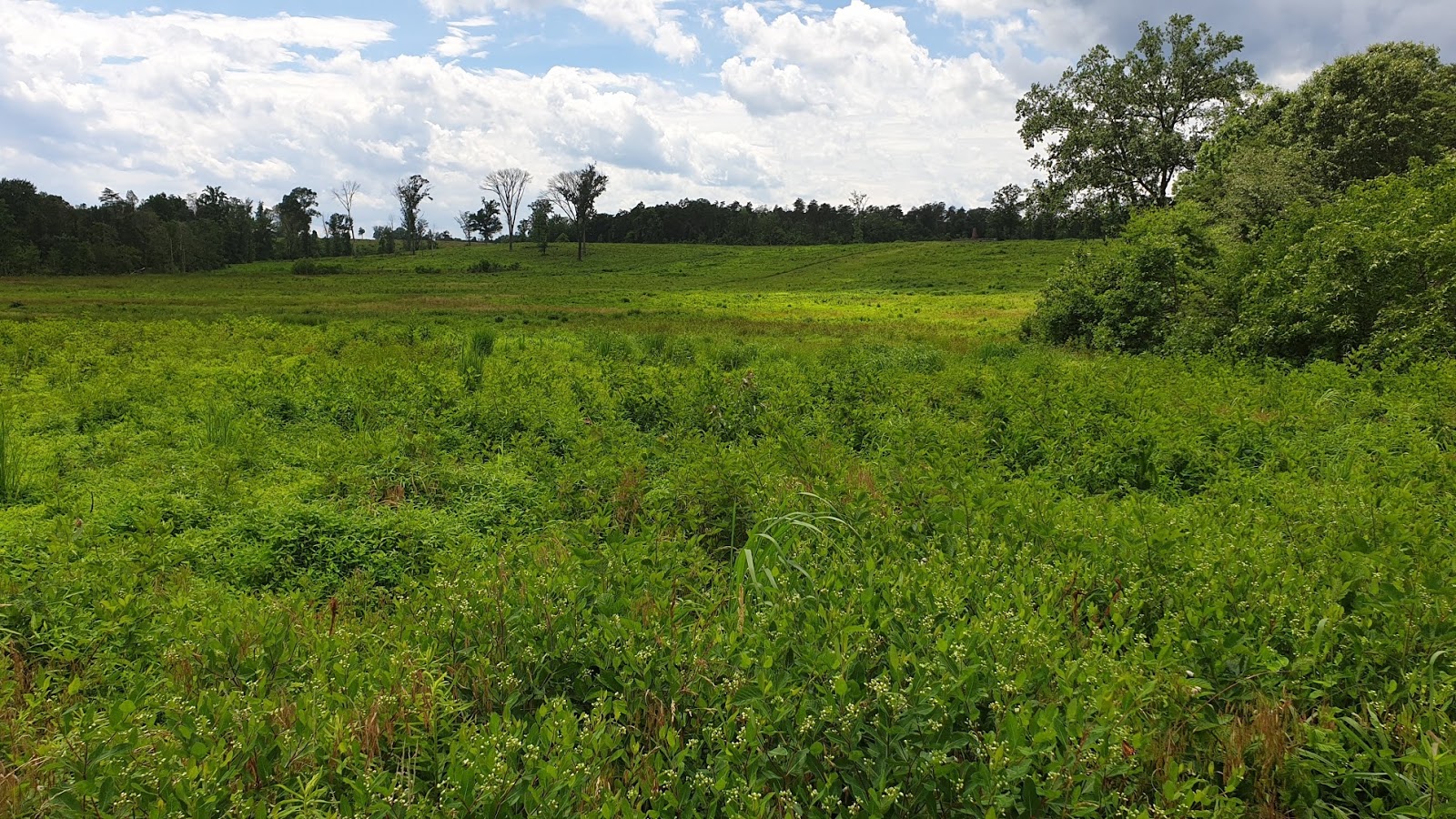
After Burnside's fiasco at Fredericksburg, the new leader of the Army of the Potomac, Joe Hooker made a better plan. He left apart of his army at at Fredericksburg while his main force went upstream to cross Rappahannock unmolested. Then he proceeded to stuff everything up & make Lee look like a genius. Lee left a small force at Fredericksburg to watch Sedgewick & marched west to meet Hooker. Hooker immediately recoiled back into the wilderness. Lee faced Hooker with 10,000 men & sent Jackson on a flank march though back roads with 30,000 men to attack the Federal right flank. The terain hid both Lee's weakness & Jackson's march. Jackson's flank attack is legendary. It drove the Union right back in chaos. But attacking in such country also totally disorganised the Rebs & Jackson himself fell to friendly fire. The Union were actually in a good position with interior lines between the two CSA wings, but Hooker didn't have the nerve to use it & pulled back allowing the CSA to rejoin their armies. He then meekly retired over the Rappahannock.
The wilderness now is still mainly mostly woods with some clearings, but now it is mature woodland with not a lot of undergrowth. In 1863 it was regrowth after the ground had been raped & pillaged by the early colonists & had a tangled undergrowth.
Jackson's route went along this road though it was little more than a goat track in 1863.
Hazel Grove was one of good fields of fire on the battlefield. Hooker gave it up without a fight.
Monday, June 24, 2019
Saturday, June 22, 2019
Fredericksburg 1862
We are staying 3 nights at Fredericksburg VA, to have rest from driving, to have a good look at the four major battles nearby & because it has pubs with good grub & beer.
At Fredericksburg in Dec 1862 Burnside provided a textbook lesson on how not to force a river crossing. First you turn up at the proposed crossing point without your bridging train. Then you wait 10 days while it comes up & the enemy concentrates his forces & digs entrenchments around your proposed bridgehead. Then you launch repeated assaults against the strongest part of the enemy line despite not one attack getting anywhere near the enemy trench line. And where your diversionary attacks actually do find a weak point in the enemy line, you don't reinforce the break-though & allow the enemy to reserves to re-take it. And do it in mid winter.
The Rappahannock is a major obstacle.
As at Manassas, there were ready made defenses for the CSA - this time a sunken road with stone walls & a nice rise the artillery to deploy behind it safely firing overhead.
There were a lot less trees on the field in 1862. If the locals hadn't already cut them down, the sappers did to clear fields of fire. Repeated assaults failed to to get within 50m of this line.
On the right of the CSA line there was no sunken road, but their entrenchments were so good that 156 years later they are still plain to see.
At Fredericksburg in Dec 1862 Burnside provided a textbook lesson on how not to force a river crossing. First you turn up at the proposed crossing point without your bridging train. Then you wait 10 days while it comes up & the enemy concentrates his forces & digs entrenchments around your proposed bridgehead. Then you launch repeated assaults against the strongest part of the enemy line despite not one attack getting anywhere near the enemy trench line. And where your diversionary attacks actually do find a weak point in the enemy line, you don't reinforce the break-though & allow the enemy to reserves to re-take it. And do it in mid winter.
The Rappahannock is a major obstacle.
As at Manassas, there were ready made defenses for the CSA - this time a sunken road with stone walls & a nice rise the artillery to deploy behind it safely firing overhead.
On the right of the CSA line there was no sunken road, but their entrenchments were so good that 156 years later they are still plain to see.
Friday, June 21, 2019
Bull Run & Manassas
The battlefields of Bull Run 1861 & Manassas 1862 overlap one another. The ground is mainly reserve & kept fairly close to the original condition, though as usual there are probably more woods now than then. The one visitors centre serves both. Bull Run is pretty well covered by a short walking tour of the main point of action on Henry Hill, while Manassas extends over a much greater area & requires a drive around. Both the battlefields are mainly rolling hills & mostly open ground. Very different from the western battlefields.
The Union did well initially & pushed the Rebs back past Henry Hill where the retreating Rebs met reserves coming up & they made a new line of defence in the trees & on the ridge above.
This is the view from the Reb's new position. The Union guns were on the ridge each side of the farmhouse. The artillery duel was at 300m range. The Union failed to break this position & withdrew.
Bull Run at Sudley Ford.
Manassas was a more complex affair going on for 3 days. Jackson set up behind an unfinished railway cut that made a ready made defensive position as bait to fix the Union for Longstreet to hit in flank. Pope, the Union commander took the bait. Jackson's men held on in the face of repeated Union attacks as Longstreet took far too long to prepare to attack. But once Longstreet finally got moving, the Union position was hopeless. New York Zouaves put a brave defence on the left of the line to buy some time for retreat & prevent total disaster, but it was a decisive Rebel victory. It served to stoke the over-confidence in the Confederate command leading to the disaster at Antienam.
A small section of the railway cutting position has been cleared back close to original situation. The cut runs along the top of the ridge in front of the trees.
The cut is eroded & overgrown now, but was then plenty deep enough to make the Rebs immune from artillery fire & be ready to pop up & blast any attackers.
We enjoyed the return to a less crowded place after the mayhem of Gettysburg, though the presence of two very busy roads intersecting in the middle of the battlefield is a nuisance & major safety issue. We had to forgo the last station of the tour because of the traffic building up late in the day on the Lee Hwy.
The Union did well initially & pushed the Rebs back past Henry Hill where the retreating Rebs met reserves coming up & they made a new line of defence in the trees & on the ridge above.
This is the view from the Reb's new position. The Union guns were on the ridge each side of the farmhouse. The artillery duel was at 300m range. The Union failed to break this position & withdrew.
Bull Run at Sudley Ford.
Manassas was a more complex affair going on for 3 days. Jackson set up behind an unfinished railway cut that made a ready made defensive position as bait to fix the Union for Longstreet to hit in flank. Pope, the Union commander took the bait. Jackson's men held on in the face of repeated Union attacks as Longstreet took far too long to prepare to attack. But once Longstreet finally got moving, the Union position was hopeless. New York Zouaves put a brave defence on the left of the line to buy some time for retreat & prevent total disaster, but it was a decisive Rebel victory. It served to stoke the over-confidence in the Confederate command leading to the disaster at Antienam.
A small section of the railway cutting position has been cleared back close to original situation. The cut runs along the top of the ridge in front of the trees.
The cut is eroded & overgrown now, but was then plenty deep enough to make the Rebs immune from artillery fire & be ready to pop up & blast any attackers.
We enjoyed the return to a less crowded place after the mayhem of Gettysburg, though the presence of two very busy roads intersecting in the middle of the battlefield is a nuisance & major safety issue. We had to forgo the last station of the tour because of the traffic building up late in the day on the Lee Hwy.
Monocacy 1864
In 1864 Lee sent Early north from the Shenadoah Valley with 15,000 to attack Washington in another desperate gamble. At the Monocacy River near Frederick in Maryland, 35 miles from Washington, Lew (Ben Hur) Wallace blocked his route where it crossed the Monocacy River with 6,000 men, mostly green Baltinore Militia. There was a wooden covered bridge for the road and a railway bridge both defended by blockhouses.
Early declined to rush the bridges & instead sent his cavalry a couple of k's south to cross at a ford & outflank the Feds. Wallace saw it coming & set up an ambush in some woods on the edge of a field that stopped the dismounted cavalry when they attacked his flank. Early then had to send infantry over the ford to do the job. The second attack succeeded in forcing Wallace to retreat, but Wallace had delayed Early for a day. This ensured that the reinforcements Grant had sent from the Richmond front by steam boat had plenty of time to get into position to totally remove any optomistic hope the Rebs had of taking Washington by coup de main.
This battlefield wasn't on our list of objectives, but it happened to be only a couple of miles away from our motel on the outskirts of Frederick. It even had its own visitors centre & a self guided tour route. It seems to be given undue importance by the line that it saved Washington by buying time. But surely even the home guard at Washington would have held off Early easily enough given it's defensive works. Or Wallace could have easily marched to Washington & help man the walls with this army.
Early declined to rush the bridges & instead sent his cavalry a couple of k's south to cross at a ford & outflank the Feds. Wallace saw it coming & set up an ambush in some woods on the edge of a field that stopped the dismounted cavalry when they attacked his flank. Early then had to send infantry over the ford to do the job. The second attack succeeded in forcing Wallace to retreat, but Wallace had delayed Early for a day. This ensured that the reinforcements Grant had sent from the Richmond front by steam boat had plenty of time to get into position to totally remove any optomistic hope the Rebs had of taking Washington by coup de main.
Everyone has to go to Gettysburg
That everyone has to go to Gettysburg is immediately apparent when you see the size of the car park at the Visitor's Centre. And the size of the Visitor's Centre itself. At 9.30 on a June weekday it was already seething when we arrived. It must be hell on a busy day. We grabbed the self guided tour brochure & escaped the centre, but still had to cope with the busloads on the way round, especially the convoy of 3 buses full of Marine Cadets.
But crowds aside it is a fascinating battlefield - with terrain that matters, move & counter move. No surprises for a wargamer of course, but there really is nothing quite like being there. The Battlefield is in the main remarkably well preserved, though as usual, there are many more trees than in 1863 so fields of fire are sometimes obscured. As usual the Parks Service has done a great job with their interpretive signage & guide brochure.
We could see that Lee might have won it with a bit more luck at critical times, but remain convinced that the campaign was an insane gamble in the first place.
Looking across the ground of Picket's charge from the start point.
And from the Union side. Everyone thinks the charge was just crazy brave, but a few months later Thomas stormed up the very steep slope of Missionary Ridge against an entrenched enemy & won with minimal casualties. There were more factors at work than the distance & lack of cover.
We found a quiet place to boil the billy for a picnic lunch at the point of the fish hook near the end of the tour route. Most of the gawkers had had enough & gone for a Maccas by then.
But crowds aside it is a fascinating battlefield - with terrain that matters, move & counter move. No surprises for a wargamer of course, but there really is nothing quite like being there. The Battlefield is in the main remarkably well preserved, though as usual, there are many more trees than in 1863 so fields of fire are sometimes obscured. As usual the Parks Service has done a great job with their interpretive signage & guide brochure.
We could see that Lee might have won it with a bit more luck at critical times, but remain convinced that the campaign was an insane gamble in the first place.
Looking across the ground of Picket's charge from the start point.
And from the Union side. Everyone thinks the charge was just crazy brave, but a few months later Thomas stormed up the very steep slope of Missionary Ridge against an entrenched enemy & won with minimal casualties. There were more factors at work than the distance & lack of cover.
We found a quiet place to boil the billy for a picnic lunch at the point of the fish hook near the end of the tour route. Most of the gawkers had had enough & gone for a Maccas by then.
Wednesday, June 19, 2019
Camp Cromwell follows Lee North 1862
In 1862 Lee struck north in the hope a great victory there would encourage European powers to recognise the Confederacy. His first objective was Harpers Ferry, a Federal arsenal town with a garrison of 12,000 men. It's a very pretty place now, nestled on a promontory between the confluence of the Potomac & Shenandoah Rivers. It looks easy to defend with Bolivar Heights making a fine defensive line across the neck of the promontory. But it's overlooked by the bluffs on the other sides of the rivers. It's like Chattanooga except very much smaller so the town's in range of guns on the surrounding bluffs.
Lee surrounded the town & Jackson attacked it from the west. Jackson had been stationed there earlier in the war & knew the ground. He sent a force through the woods at night, dragging 20 guns through the scrub & up steep slopes to outflank the Union position on Bolivar heights & 12,000 Yankees had no choice but surrender.
This is the view from Bolivar Heights looking east. There were less trees there then. Finding a Reb division with 20 guns deployed there behind their flank when the Union army woke up in the morning must have been rather dispiriting.
While the Rebs were taking Harpers Ferry McClennan was massing an army twice the size of Lee's in Maryland. The sensible thing to do was to declare victory & go home with the spoils of war, but Confederate generals didn't think that way (or at all often). Lee headed north to Sharpsburg where he Made a stand against McClellan's army at the battle that became known as Antietam. The battle raged all day with no decisive result as the army of the Potomac again demonstrated the total incompetence of its generals. They made a series of uncoordinated frontal attacks with no attempt to use their superior numbers to outflank the Rebs. The first day was a bloody draw. The next day nothing happened as both sides licked their wounds.
The Rebs were outnumbered 2:1 & held their ground inflicting 12,000 casualties for 10,000 of their own. But the North could afford the loss the South could not. A good general like Grant would have realised that the Rebs were even more stuffed than his own men (with 25% casualties compared with 15%), attacked & routed Lee on day two, but McClennan did nothing & let him quietly sneak away the next night.
The contrast in the terrain with the battlefields we'd seen in the west is obvious. The ground is so much more open with fields of corn & wheat, but with some ready made strong points like a sunken road & strong fencing.
A tower built in the middle of the battlefield provides a wargamer's overview.
Looking NW from the tower. The Union attacked the sunken road from the right.
looking SE from the tower. The Union attacked from the left.
On the Union left, this is Hooker's bridge. Rebs dug in on the hill on the other side held the bridge for some hours.
Hooker sent 3,000 men down river looking for a ford, but by the time they found one the Rebs had ran low on ammo & the Feds had stormed across the bridge anyway. Hooker began to roll up the Reb line, but Hill's Division arrived from Harpers Ferry in the nick of time to hit Hooker in flank & save Lee's butt.
An interesting item we found on the battlefield was the monument to the Federal Irish Brigade - which mentions Tasmania on the side dedicated to its commander. It was lead by Thomas Meagher who was an Irish revolutionary who was sent to Van Diemans Land but escaped & went to the US.
Lee surrounded the town & Jackson attacked it from the west. Jackson had been stationed there earlier in the war & knew the ground. He sent a force through the woods at night, dragging 20 guns through the scrub & up steep slopes to outflank the Union position on Bolivar heights & 12,000 Yankees had no choice but surrender.
This is the view from Bolivar Heights looking east. There were less trees there then. Finding a Reb division with 20 guns deployed there behind their flank when the Union army woke up in the morning must have been rather dispiriting.
While the Rebs were taking Harpers Ferry McClennan was massing an army twice the size of Lee's in Maryland. The sensible thing to do was to declare victory & go home with the spoils of war, but Confederate generals didn't think that way (or at all often). Lee headed north to Sharpsburg where he Made a stand against McClellan's army at the battle that became known as Antietam. The battle raged all day with no decisive result as the army of the Potomac again demonstrated the total incompetence of its generals. They made a series of uncoordinated frontal attacks with no attempt to use their superior numbers to outflank the Rebs. The first day was a bloody draw. The next day nothing happened as both sides licked their wounds.
The Rebs were outnumbered 2:1 & held their ground inflicting 12,000 casualties for 10,000 of their own. But the North could afford the loss the South could not. A good general like Grant would have realised that the Rebs were even more stuffed than his own men (with 25% casualties compared with 15%), attacked & routed Lee on day two, but McClennan did nothing & let him quietly sneak away the next night.
The contrast in the terrain with the battlefields we'd seen in the west is obvious. The ground is so much more open with fields of corn & wheat, but with some ready made strong points like a sunken road & strong fencing.
A tower built in the middle of the battlefield provides a wargamer's overview.
Looking NW from the tower. The Union attacked the sunken road from the right.
looking SE from the tower. The Union attacked from the left.
On the Union left, this is Hooker's bridge. Rebs dug in on the hill on the other side held the bridge for some hours.
Hooker sent 3,000 men down river looking for a ford, but by the time they found one the Rebs had ran low on ammo & the Feds had stormed across the bridge anyway. Hooker began to roll up the Reb line, but Hill's Division arrived from Harpers Ferry in the nick of time to hit Hooker in flank & save Lee's butt.
An interesting item we found on the battlefield was the monument to the Federal Irish Brigade - which mentions Tasmania on the side dedicated to its commander. It was lead by Thomas Meagher who was an Irish revolutionary who was sent to Van Diemans Land but escaped & went to the US.
Tuesday, June 18, 2019
The Shenandoah Valley
At Resica we left Sherman to march south on Atlanta & headed east. It took us 4 days with 3 nights camping in the woods to cross the Appallacians to the eastern theatre of the war. Suddenly every became very close together & today we visited 8 battlefields between Waynesboro & Winchester while travelling only 148 miles. Some were small & unremarkable, but they still added to the vibe of the valley. The richness of the valley is obvious. The valley floor is rolling country with a mix of woods & open fields. It is impossible to know exactly how the present day woods correspond to the time of the war. Some there then would have been cleared since. Some areas now wooded, had been cleared for charcoal. But the general character seems to still correspond with the descriptions one reads - a mix of open ground & woods with rolling hills - generally much more open than out west. As we fought an 1862 campaign at Camp Cromwell early last year it all seemed very familiar.
Cross Keys & Fort Republic 1862
These were the last two battles of jackson's 1862 campaign, close together, they were fought on successive days. Early on the left of the Reb's position faced Fremont at Cross keys while Jackson on the right faced Shields.
Meanwhile at Fort Republic Fremont had a sound position with a river on his right & hills making a great artillery platform on left. Jackson, madly chose to attack. The attack predictably failed & the Feds pursued the beaten Rebs across the fields. But Ewell had showed up from Cross Keys & been sent to the Rebs right. He attacked the pursuers in flank & turned defeat into victory.
Jackson retired, having done his job of distracting 3 Union Corps from the main game near Richmond.
New Market 1864
In 1864 Grant sent Sigel down the valley to deny it's resources to the Confederacy. Brekinridge, was defending the valley, but was heavily outnumbered. The battle had little tactical manoeuvre or interesting terrain. The most unique feature of the battle was the CSA's desperate use of cadets from a military academy to fill out their ranks - with predictably tragic results.
Fishers Hill 1864
After Early's raid north to try & distract Union troops from Richmond, Grant sent Sheridan to drive him out of the valley. Early had set up a defensive line at Fishers Hill just south of Strasburg. His right rested on the North Fork of the Shenadoah, but his left on Fisher's hill did not extend to the mountains on his left as he lacked enough men to do so.
This is the Union view of the end of Early's line.
Sheridan moved a division to the right across his rear out of sight of the Rebs to push through the woods on the Reb's left & outflank them.
The woods on the Reb flank look pretty thick now, but were very possibly more open then. But the description above indicates that the veteran troops were not fazed by the disorder caused. They burst out onto the Reb's flank & the end f the Reb line broke. Early tried to cobble together a new line of defence, but it didn't happen & the Rebs were beat.
Cedar Creek 1864
After Fishers Hill Sheridan consolidated his hold on the lower valley. The Union were convinced that Early was spent force & over-relaxed in their camp at Cedar Creek several miles north of Fisher Hill. But Early rhad received reinforcements & launched a surprise dawn attack. The Union units at the very front were routed, but others held their ground for a while & bought time. Sheridan was away from the front the morning of the attack, but galloped down the road to join his men leaving a line of officers to round up stragglers. The Rebs advanced about 5km before Sheridan had cobbled together a sound defensive line. Early paused the attack, momentum was lost & the Rebs had to fall back. It was the same old story as Shiloh & Murfreesboro, the Rebs surprised the Union, thought they'd won, declared victory, then the Union rally & they Rebs end up losers.
The main Union campground abandoned as the Rebs attacked form the left.
Kernstown 1862 & 1864
The Kerntown battlefield is privately owned & only open at weekends. It was Monday, so we missed out on these two.
Cross Keys & Fort Republic 1862
These were the last two battles of jackson's 1862 campaign, close together, they were fought on successive days. Early on the left of the Reb's position faced Fremont at Cross keys while Jackson on the right faced Shields.
Meanwhile at Fort Republic Fremont had a sound position with a river on his right & hills making a great artillery platform on left. Jackson, madly chose to attack. The attack predictably failed & the Feds pursued the beaten Rebs across the fields. But Ewell had showed up from Cross Keys & been sent to the Rebs right. He attacked the pursuers in flank & turned defeat into victory.
Jackson retired, having done his job of distracting 3 Union Corps from the main game near Richmond.
New Market 1864
In 1864 Grant sent Sigel down the valley to deny it's resources to the Confederacy. Brekinridge, was defending the valley, but was heavily outnumbered. The battle had little tactical manoeuvre or interesting terrain. The most unique feature of the battle was the CSA's desperate use of cadets from a military academy to fill out their ranks - with predictably tragic results.
Fishers Hill 1864
After Early's raid north to try & distract Union troops from Richmond, Grant sent Sheridan to drive him out of the valley. Early had set up a defensive line at Fishers Hill just south of Strasburg. His right rested on the North Fork of the Shenadoah, but his left on Fisher's hill did not extend to the mountains on his left as he lacked enough men to do so.
This is the Union view of the end of Early's line.
Sheridan moved a division to the right across his rear out of sight of the Rebs to push through the woods on the Reb's left & outflank them.
The woods on the Reb flank look pretty thick now, but were very possibly more open then. But the description above indicates that the veteran troops were not fazed by the disorder caused. They burst out onto the Reb's flank & the end f the Reb line broke. Early tried to cobble together a new line of defence, but it didn't happen & the Rebs were beat.
Cedar Creek 1864
After Fishers Hill Sheridan consolidated his hold on the lower valley. The Union were convinced that Early was spent force & over-relaxed in their camp at Cedar Creek several miles north of Fisher Hill. But Early rhad received reinforcements & launched a surprise dawn attack. The Union units at the very front were routed, but others held their ground for a while & bought time. Sheridan was away from the front the morning of the attack, but galloped down the road to join his men leaving a line of officers to round up stragglers. The Rebs advanced about 5km before Sheridan had cobbled together a sound defensive line. Early paused the attack, momentum was lost & the Rebs had to fall back. It was the same old story as Shiloh & Murfreesboro, the Rebs surprised the Union, thought they'd won, declared victory, then the Union rally & they Rebs end up losers.
The main Union campground abandoned as the Rebs attacked form the left.
Kernstown 1862 & 1864
The Kerntown battlefield is privately owned & only open at weekends. It was Monday, so we missed out on these two.
Moving South with Sherman
Just SE of Chickamauga, at Ringgold there is a
narrow gap in a steep wooded ridge running N-S that the all-important railway
ran through. After Chattanooga, the
Rebs retreated through the gap leaving a rear guard. Grant had sent Hooker in pursuit of the
beaten Rebs, but they left a rear guard at the pass which stopped the pursuit
& allowed the Reb army to get away with its artillery & baggage. The Union army regrouped at Chattanooga
prepared for a new offensive in the spring.
In May 1864 Sherman
began his march on Atlanta. A few miles
southeast of Ringgold, there was another gap in another steep wooded N-S ridge
called Rocky Face. The Rebs now had
Johnson in command & about 54,000 men which he deployed to block the pass
with substantial earthworks in the pass & along the ridge with the north
end curved back to protect his flank. Sherman had about 74,000 men. He ordered attacks at various points, but
soon confirmed that the position was too strong. He had already sent McPherson South to cut
off Johnson’s line of retreat but Johnson realised what was happening
& retired south. Casualties were
less than 1,000 each.
The gaps are difficult to photograph being heavily wooded gaps between heavily wooded ridges with a road & a railway passing through.
The Resica position
was almost a repeat of Ringgold & Rocky Face, except this time the gap was
between the end of a ridge & the substantial Oustanaula River. The gap was defended by Fort Wayne & 4,000
Rebs. McPherson had 4 times as many, but
declined to attack the strong defences, so Johnson was able to bring his army south & draw up his now reinforced army in another good defensive position. Once again Sherman attacked at various points
along the line looking for weak points & not finding any. But at the same time his engineers were
building a bridge over the Oustanaula.
Once again Johnson twigged what Sherman was up to & withdrew his
army intact. 110,000 Union troops were in the area v. 60,000 Rebs, but casualties
were less than 3,000 each. Neither of
these Generals wanted to have their armies mangled in slogging matches.
The terrain is a mix of open plain & wooded ridges.
But in 1864 the woods had largely been cleared.
Much of the battlefield is is reserved & well marked with interpretive signs. The Oustanaula is a substantial barrier.
Fort Wayne was a substantial work & though parts of it remain it's difficult to get good photos through the scrub (which of course had been cleared away in 1864).
Subscribe to:
Posts (Atom)